Many food trucks are self-sufficient and use LPG, a generator or batteries. Some need a mains supply, so always check the listing and confirm with the supplier.
Food Truck Power Supply: A UK Venue Guide
Customer · Updated 1 month ago
Contents
🔌 Most food trucks bring their own power. Check the listing and confirm the exact requirements with the supplier before your event.
Power is one of the practical details worth checking when you book a food truck. Many UK food trucks are self-sufficient, but some need access to a mains power supply at the venue.
A quick conversation with the supplier and your venue is usually all it takes. This guide explains the common setups, the questions to ask and what to plan before the truck arrives.
Do food trucks need an external power supply?
Often, no. Food trucks are designed to work in places where mains electricity may not be available. Depending on the truck, power may come from LPG, an onboard generator, batteries or a combination of these.
LPG for cooking
Burners, grills, fryers and ovens are often gas-powered, taking care of the truck's biggest energy demand.
Onboard generator
A generator can run lighting, refrigeration, extraction fans, coffee machines and till systems.
Battery or inverter
Some smaller trucks use leisure batteries or inverters for LED lighting and basic electronics.
Food truck power supply types in the UK
If the truck needs venue power, the supplier should tell you the required current, phase, connector and number of outlets. These are the three supplies you're most likely to encounter.
| Supply | What it is | Typical use |
|---|---|---|
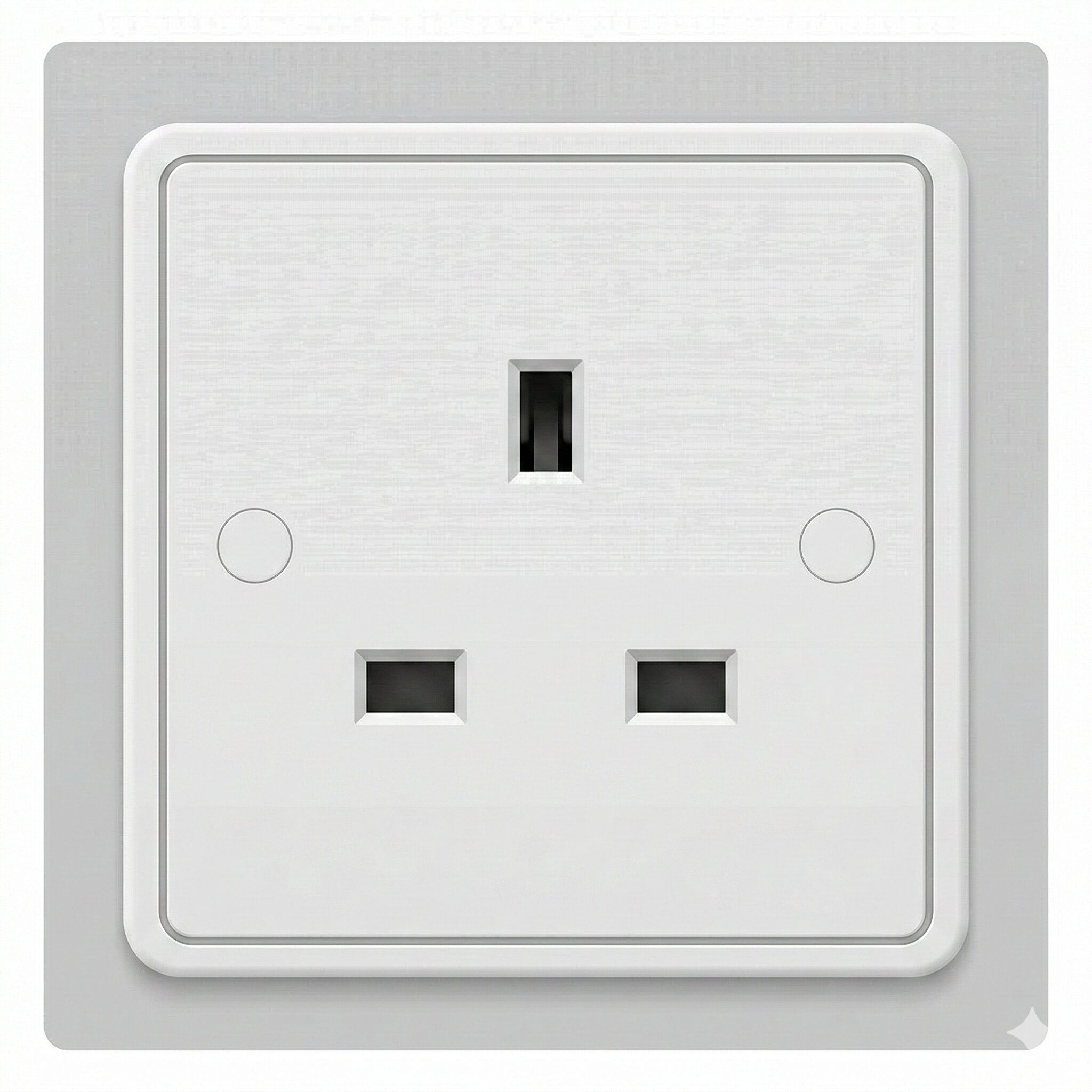
13A socket | Standard UK 3-pin mains socket | Lighting, refrigeration or one smaller appliance |
16A commando | Usually blue single-phase or red three-phase | Larger appliances and event setups |
32A commando | Heavy-duty event or commercial supply | Commercial ovens or several high-draw appliances |
⚠️ Do not guess from the socket size alone. Confirm the exact connector, current and phase with the supplier and venue. If either side is unsure, use a qualified electrician.
Standard 13A socket
This is the normal 3-pin socket found in UK homes and venues. Some operators only need one or two 13A sockets for equipment such as a fridge, lighting or a coffee machine.
Ask how many sockets are needed and whether the supplier requires a dedicated circuit. A socket being available does not automatically mean the circuit can safely handle a sustained high load alongside other equipment.
16A commando socket
A 16A commando connection is a step up from a standard plug. Blue 3-pin connectors are normally single-phase, while red 5-pin connectors are normally three-phase.
Confirm the colour and pin configuration with the supplier, then ask the venue whether it has an exact match. If it doesn't, tell the supplier early so they can confirm a safe alternative.
32A commando socket
A 32A supply is usually needed only by larger trucks with commercial ovens or several high-draw appliances. These connections are more common at commercial premises and established event venues than at private homes.
As with 16A supplies, the supplier and venue must agree the exact connector and setup. If the venue cannot provide it, ask whether the truck can use a suitable generator or a different configuration.
Extension leads and outdoor electrical safety
Most operators who need mains power bring their own lead. Ask how long it is and tell them the distance from the socket to the truck's pitch. Plan the cable route so it stays away from guests, vehicles and standing water.
Extension leads should be correctly rated, suitable for the conditions and fully unwound. Do not overload them or plug one extension lead into another. Electrical Safety First has more guidance on using extension leads safely.
For larger or more complex events, the HSE recommends planning mains access, generator use, weather protection and cable routing as part of the temporary electrical setup. See the HSE's event electrical safety guidance.
What if the food truck brings a generator?
A generator usually means the truck can operate without venue power, but there are still two practical points to check.
Noise
Modern generators can be relatively quiet, but they still hum. For a garden party or ceremony, ask whether it can sit away from the main gathering area.
Placement and restrictions
Generators need safe ventilation and separation from guests. Check whether the venue restricts generators, fuel storage or operating hours.
Food truck power checklist for your venue
Does the food truck bring its own power?
If venue power is needed, what current, phase, connector and number of outlets are required?
How far is the nearest suitable supply from the truck's pitch?
Who is providing the cable, and how will it be protected from weather, guests and vehicles?
Are the sockets RCD-protected and suitable for the planned load?
Does the venue restrict generators, fuel storage or generator noise?
Will other trucks, lighting or a PA system share the same supply?
Who will confirm the final setup before the event?
The short version
For most bookings, power is straightforward: the truck arrives with everything it needs. If mains power is required, confirm the exact supply with both the supplier and venue before the day.
If the requirements for a food truck on Nuento are unclear, contact the supplier or email us at contact@nuento.co.uk. We'll help you pin down the details.
Ready to find your food truck?
Compare food trucks for your event and confirm the power setup directly with the supplier.